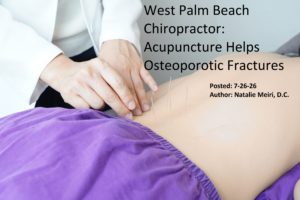
West Palm Beach Chiropractor: Acupuncture Treats Thoracic Outlet Syndrome


This post is about Chiropractor West Palm Beach: Acupuncture Treats Thoracic Outlet Syndrome.  You may have pain in the neck and shoulder with numbness in the fingers. You may have diffuse (spread out) arm symptoms, including numbness and tingling. Often, you may describe the pain taking a path down the inside of your arm to the little and ring fingers. Also, when you do any overhead activity, it is often made worse. For example, overhead throwing, serving a tennis ball, and painting a ceiling may exacerbate symptoms. Frequently, you may have weakness radiating from the neck and shoulder and extending into the arm and hand.  Even driving and typing may sometimes be difficult.

If you have Thoracic Outlet Syndrome, acupuncture can provide relief! We’ve got some great information to share below.


What is Thoracic Outlet Syndrome?

The term “thoracic outlet” is the area between the neck and shoulder, over the top of the thorax (chest), and under the clavicle (collar bone). It is a space in the lower neck between the thorax and axilla (armpit) through which the subclavian vein, subclavian artery, and brachial plexus (network of nerves that provides movement and feeling to the shoulder, arm and hand) travel.

Moreover, compression at the thoracic outlet can involve the brachial plexus, subclavian artery, or subclavian vein at various sites as they travel downward into the arm. Indeed, several common sites are possible for compression.  And there are many causes of Thoracic Outlet Syndrome.

Firstly, compression may be due to physical trauma such as from a car accident or a sports injury. Secondly, anatomical defects from birth may show symptoms later in life. Thirdly, tumors that press on nerves, though rare, are possible. Fourthly, the changes of pregnancy (e.g. postural, hormonal, swelling) may lead to Thoracic Outlet Syndrome.  Lastly, poor posture such as a forward head carriage and rounded shoulders can lead to compression. And repetitive arm and shoulder movements and activity, such as from playing certain sports also are a potential culprit. These overuse injuries can lead to swelling and fibrosis causing compression of the nerves and vessels.  

Diagnosis is through history, examination and testing. Additionally, Nerve conduction studies or imaging (x-ray) studies may be ordered. Ultimately, this is to confirm or rule out a diagnosis of Thoracic Outlet Syndrome. 

Compression at the Thoracic Outlet 


Cervical Rib

Compression may occur at an elongated C7 transverse process. It is a small bony projection off the right and left side of each vertebrae of the spinal column also called a “cervical (neck) rib”.  This is an abnormality only found in 1% of the population from birth. 

Scalene Triangle

Muscular compression can occur at the scalene (three paired muscles located in the lateral (side) aspect of the neck) muscles. This narrow vertical space formed between the two scalene muscles, with the first rib at the base, is called the scalene triangle. The major nerves and blood vessels supplying the upper extremity (limbs) lie within or next to the scalene triangle. Moreover, as they pass through the upper part of the thoracic outlet over the first rib, compression can happen. 

Subcoracoid Space</span>

The pectoralis minor is a small muscle that lies deep to the much larger pectoralis major muscle in the front of the upper chest. It arises from the upper ribs and runs upward to attach to a bony protrusion underneath the clavicle known as the coracoid process. Subsequently, the nerves and blood vessels pass underneath the pectoralis minor tendon through the subcoracoid space where compression may occur.

Costoclavicular Space

Compression can occur at the costoclavicular area. After passing over the first rib, the brachial plexus nerves, subclavian artery, and subclavian vein all pass together underneath the clavicle. Next, they cross underneath a small muscle that runs along the back of the clavicle, called the subclavius muscle. Additionally, this muscle attaches to the front part of the first rib, where it forms a band of dense connective tissue called the costoclavicular ligament. 


Chiropractor West Palm Beach: Acupuncture Treats Thoracic Outlet Syndrome: Research

Firstly, in one study a patient with left shoulder pain and left arm numbness was treated with acupuncture. Acupuncture along with natural therapies (e.g. herbal medicine and physical therapy) was provided.  After 3 weeks of treatment, they were much improved. The case study concluded that an integrated approach along with acupuncture relieved the TOS.(1)

Secondly, in another case study, the long-time improper posture of holding a baby was the culprit of TOS in a new mother.  The mother’s muscle imbalance in the cervical vertebra and shoulder girdle caused muscular thickening and hyperplasia (increase in the number of cells causing tissue enlargement). For example, her scalene muscle and pectoralis minor muscle.  This caused thoracic outlet stenosis (blood vessel narrowing).  And acupuncture treatment was effective. (2)

Thirdly, numerous studies have shown that acupuncture can adjust the production of neurotransmitter, mainly 5-hydroxytryptamine (serotonin).  This reduces nerve sensitivity.  Serotonin, or 5-hydroxytryptamine (5-HT), is a neurotransmitter with an important physiological role in the human body. It regulates activities including behavior, mood, memory, and gastrointestinal homeostasis. Therefore, as an analgesic form of therapy, the effect of acupuncture has been considered as a safe therapy. (3).


Dr. Natalie Meiri
Dr. Natalie Meiri


Chiropractor West Palm Beach: Acupuncture Treats Thoracic Outlet Syndrome

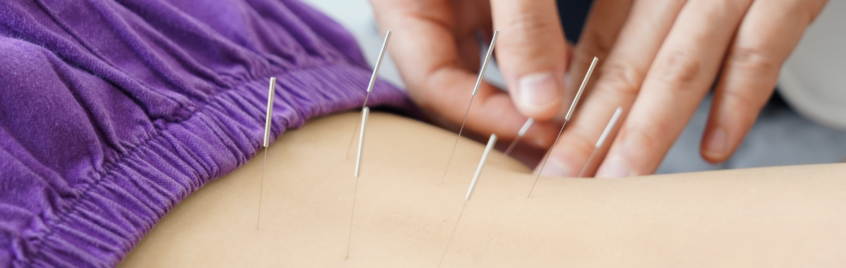
Acupuncture is a treatment that has been used for over 4000 years for health problems. Traditionally, Acupuncture has been reported to alleviate pain and discomfort by rebalancing the energy (Qi). It is based on the belief that an energy, or “life force”, flows through the body in these channels called meridians. It is a painless technique used to affect what the ancient chinese practitioners called Meridians (energy channels) in your body under the skin. In summary, acupuncture can regulate the balance of qi and blood by stimulating acupuncture points. And the aim is at improving physiological function.

Today, Researchers believe when an acupuncture needle is inserted, the sensory and proprioceptive nerves are stimulated. This sends a message to your brain and nervous system. Ultimately, Acupuncture improves blood flow and calms the nervous system.  This triggers nerve signaling that affects the function of other parts of the body, including organs.


Acupuncture Treatment at Meiri Chiropractic of Thoracic Outlet Syndrome

Dr. Natalie Meiri is a chiropractic physician, board certified in acupuncture with over 20 years of experience.  Call 561-253-8984 today!  Ask to make an appointment or find out more about: Chiropractor West Palm Beach: Acupuncture Treats Thoracic Outlet Syndrome.


References:

(1) A Case Report of Thoracic Outlet Syndrome Improved by Integrated Korean Medical Treatment


https://www.e-jar.org/journal/view.html?uid=2144&vmd=Full

(2) Acupuncture Analgesia Thoracic outlet syndrome with drop shoulder


https://www.sciencedirect.com/science/article/abs/pii/S1003525719300170

(3) Acupuncture for treating chronic spinal pain: A systematic review and meta-analysis protocol 

https://pmc.ncbi.nlm.nih.gov/articles/PMC972641


Chiropractor West Palm Beach: Relief From Low Back Pain from Disc Disease With Acupuncture

From Dr. Natalie Meiri’s clinical pearl stories: West Palm Beach Chiropractor: Relief From Low Back Pain from Disc Disease With Acupuncture

This is my clinical pearl story about West Palm Beach Chiropractor: Relief From Low Back Pain from Disc Disease With Acupuncture.  She was a 62 year old female patient.  Her chief complaints were buttock and posterior (back) leg pain.  And it came on insidiously (gradual, subtle but with harmful effects) without any trauma.  To be HIPAA compliant, I will call her Julie instead of her real name.

Julie worked as an office worker her whole life. Consequently, she spent most of her days sitting at a desk.  She ate a healthy diet and exercised regularly.  One day she presented to my office reporting pain in the gluteal (buttock) region and wearing a back brace.  It was characterized as shooting, burning, or aching down the back of both legs. In addition, she reported numbness in the buttocks and tingling sensations. And it was along the distribution of the sciatic nerve.

Julie had seen previous chiropractors for many years due to chronic back pain.  She had all her current x-rays and MRIs (magnetic resonance imaging).  Furthermore, she was also seeing a physical therapist, but still wasn’t getting completely better. Julie didn’t want surgery and didn’t want to take conventional drugs for the pain. So that’s when she decided to come see me.  Julie thought the combination of chiropractic and acupuncture might help her. 

Julie’s Examination at Meiri Chiropractic

Upon examination, Julie tested positive for sciatica from Lumbosacral Disc Disease. .  Her x-rays and MRIs confirmed the degenerative arthritis (osteoarthritis) and disc disease. Julie’s diagnosis was Lumbosacral Disc Disease. Julie had all the typical symptoms of sciatica with back and leg pain  caused by the degeneration of the spinal discs in the lower back. Symptoms typically include lower back pain that radiates to the buttocks or legs (sciatica), numbness, and muscle weakness.

What is Sciatica?

Firstly, the sciatic nerve is the largest nerve in the human body. Sciatic nerves originate from several nerves in your lower back. These nerves branch outward from the spine. And then it comes together at each buttock to form the sciatic nerve, which then radiates down each leg.

Secondly, the word “sciatic” is defined as relating to the hip or ischium or to any structure in its vicinity, as the sciatic nerve. The ischium is a paired bone (one on each side) of the pelvis that forms the lower and back part of the hip bone(s). 

Thirdly, sciatica is defined as irritation or compression of the sciatic nerve that causes pain in the buttock area with radiation to the lower leg. It is a condition characterized by pain along the course of the sciatic nerve.  This is usually a neuritis (inflammation of a nerve).  It is generally caused by mechanical compression or irritation of the lumbar and sacral spinal nerve roots.

Fourthly, many cases have a spinal cause, such as disc herniation/bulge causing impingement of L5 or S1 nerve roots. Other common causes include spinal stenosis, degenerative disc disease (wear and tear arthritis/osteoarthritis), and spondylolisthesis. There are also other causes of sciatica, which are less common. These include piriformis, trauma, post-operative complications, gynecologic conditions, and herpes zoster (shingles).


West Palm Beach Chiropractor: Efficacy of Acupuncture Research on Low Back Disc Disease in One Study

Firstly, one study sought to show the improvement with acupuncture in some low back muscle pain in patient’s with disc disease. These muscles included: multifidus, erector spinae, and psoas major muscles, along with their “fatty infiltration”.  And these were patients diagnosed with lumbar disc herniation treated through acupuncture.

Secondly, muscle fat infiltration is the replacement of healthy back muscle fibers with fatty deposits. In low back disc disease, spinal instability and nerve compression cause deep stabilizing muscles to “stop working”. This chronic disuse leads to muscle atrophy and “fatty replacement”.  Ultimately, this leads to continued lower back pain and stiffness.

Thirdly, in the same study, participants were divided into acupuncture and rehabilitation therapy groups. The acupuncture patients received treatments at specific acupuncture points, while the rehabilitation group received “traditional rehabilitative therapy”. In conclusion, “this study demonstrates that acupuncture treatment is significantly more effective than traditional rehabilitation therapy in improving paraspinal muscle function, reducing muscle fat infiltration, and alleviating lumbar and leg pain in patients with lumbar disc herniation”. (2)


Dr. Natalie Meiri
Dr. Natalie Meiri


Julie’s Chiropractic and Acupuncture Treatments at Meiri Chiropractic

Julie started her care at my office with chiropractic care 2-3 times a week. She showed improvement after 2 weeks and then I incorporated acupuncture 1-2 times week.

Julie reported that she was starting to feel better after the initial visit.  And after the acupuncture treatments, she was no longer wearing a back brace and moving much better. After 3 months of continued weekly care, Julie was mostly pain-free.  Also, she was able to do many more activities now that her low back was better.


West Palm Beach Chiropractor: Relief From Low Back Pain from  Disc Disease With Acupuncture

Firstly, Acupuncture is a treatment that has been used for over 4000 years to treat pain and other health problems. It is a painless technique in our office and we use very thin needles. The needles affect what the ancient chinese practitioners called Meridians.  These are energy channels in your body under the skin.

Secondly, Acupuncture’s effectiveness has been well documented in musculoskeletal pain disorders and other ailments.  

Ultimately, Acupuncture treatments stimulate the meridians.   The goal is to activate the body’s natural healing abilities.  


Chiropractor West Palm Beach: Relief From Low Back Pain and  Disc Disease With Acupuncture

Meiri Chiropractic offers acupuncture for low back disc disease and many other ailments. Dr. Natalie Meiri is a chiropractic physician, board certified in acupuncture with over 20 years of experience.  Call today for your acupuncture treatment at 561-253-8984! 


References:

  1. Thomas Souza, (2018) Differential Diagnosis and Management for the Chiropractor
  1. 2024 Nov 6:15:1467769. doi: 10.3389/fendo.2024.1467769. eCollection 2024.

Efficacy of acupuncture for lumbar disc herniation: changes in paravertebral muscle and fat infiltration – a multicenter retrospective cohort study

Liang Yan #  1 Jiliang Zhang #  2 Xianliang Wang #  3 Qinming Zhou  4 Jingdong Wen  5 Haihong Zhao  6 Kai Guo  6 Jianhua Zeng  6   https://pubmed.ncbi.nlm.nih.gov/39568818/