This post is about Chiropractor West Palm Beach: Acupuncture for Neck Pain Relief. Symptoms may only be stiffness or restricted range of motion. Looking over the shoulder may not be possible. And/or moving the head in any direction may be difficult. This came on insidiously (slowly, gradually) for you. Finally, it is painful and muscle spasm is present.
Common muscle imbalances at or affecting the cervical spine include tightness of the sternocleidomastoids (SCMs). Also, short, deep neck extensors, upper trapezius, levator scapulae, and the pectoralis major and minor. Muscles can get inhibited (the nerve signals needed to activate and control the muscle are impaired, leading to weakness and poor function). These include the deep neck flexors. Also, the lower stabilizers of the scapulae, including the lower and middle trapezius and the rhomboids are involved. In the end, these imbalances often lead to a rounded shoulder-forward head position.
Fortunately, if you have neck pain and dysfunction, acupuncture can provide relief! We’ve got some great information to share below.
Chiropractor West Palm Beach: Cervical Spine Anatomy and Chronic Neck Pain Connection…
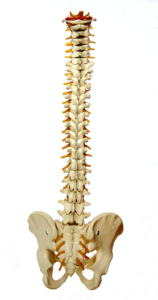
The cervical spine has the task of maintaining head posture while allowing for a great deal of mobility. Moreover, the cervical spine must balance the weight of the head atop a relatively thin and long lever. This makes it quite susceptible to traumatic forces. The cervical facets (paired joints in neck) allow movement in all directions. In fact, the cervical spine is therefore the most movable portion of the spine. Anatomically, it is quite vulnerable.
Relevant Cervical Spine (Neck) Anatomy
Firstly, the cervical spine can be divided into 2 sections when describing the anatomy. The first section is the upper cervical spine consisting of the occiput (bottom of skull) and CI-C2. The second section would be the lower cervical spine (C2-C7/TI). Functionally, there is a distinction between these two sections due to the greater degree of rotation at the upper cervical spine. So the unique articulation between the C2 and C1 vertebrae allow this greater rotation. Specifically, the dens of C2 is the pivot for rotation. Additionally, there is more lax ligamentous structures in this area. Therefore, the muscles are more supportive and intricate so as to provide the stability and control. Indeed, this area has more laxity in the ligamentous system than the thoracic (mid back) and lumbar (low back) spine.
Secondly, another difference in the upper cervical spine is there is no disc between and C0, C1 and C2 levels. Discs, called intervertebral discs, are positioned between each vertebra throughout the rest of the spine.
Thirdly, neurologically, the upper cervical spinal cord has a unique connection with the central nervous system. This is through the trigeminocervical nucleus (functional convergence zone in the upper cervical spinal cord where sensory nerve fibers from the face (via the trigeminal nerve) and the upper neck (C1-C3 spinal nerves) meet. Here there is an intermingling of the spinal nucleus of the trigeminal nerve and the dorsal horn of the upper cervical spinal nerves. This is an anatomical explanation for the cause of headaches, dizziness, and facial pain.

Chiropractor West Palm Beach: Acupuncture for Neck Pain Relief- Research
Firstly, in the treatment of neck pain, the first option is a conservative approach using conventional medications (CMs) such as nonsteroidal anti-inflammatory drugs (NSAIDs), muscle relaxants, opioid analgesics, and corticosteroids. However, these have provided limited pain relief. Furthermore, these have been often accompanied by adverse effects. These include dizziness, drowsiness, intoxication, allergic reactions, hepatic and gastrointestinal dysfunctions.
Secondly, in one study, Acupuncture was found as an adjunct therapy providing post-treatment pain relief. Pain relief lasted at least 3 months for patients with chronic neck pain. The study did a literature search up to March 2024 in six databases. It also measured acupuncture for safety profile and found it to be good. (1)
Thirdly, in another study, twenty-six trials involving 3520 participants were included. Acupuncture treatment demonstrated significantly greater reductions in pain intensity. Acupuncture also showed significant improvements in quality of life. (2)
Fourthly, in yet another study, Acupuncture was shown to be superior to various interventions. In this study, it stated ” BACK PAIN is among the most prevalent health complaints of mankind. It is, therefore, associated with much individual suffering and considerable socioeconomic consequences. Back pain is also the most frequent indication for using unconventional therapies. Survey data suggested that back pain is one of the most common indications for referral to acupuncturists”. Furthermore, collectively, the data suggested that acupuncture is an effective treatment for back pain or spinal pain. (3)
Finally, Acupuncture is believed to stimulate the central nervous system. This releases chemicals into the muscles, spinal cord, and brain. So these biochemical changes may stimulate the body’s natural healing abilities. Next, it promotes physical and emotional well-being. Studies have shown that acupuncture is effective alone or when used with chiropractic therapies to treat these conditions.
Chiropractor West Palm Beach: Acupuncture for Neck Pain Relief
Acupuncture has been used for over 4000 years to treat pain and other health problems safely and effectively. The acupuncture treatment stimulates the imbalanced pathways called meridians. This activates the body’s natural healing abilities. Ultimately, this brings balance back to your body. Acupuncture has a beneficial effect when treating many diseases and painful conditions.
Meiri Chiropractic offers acupuncture for neck pain and many other ailments. Dr. Natalie Meiri is a chiropractic physician, board certified in acupuncture with over 20 years of experience. Call today for your acupuncture treatment for neck pain at 561-253-8984.
References:
(1) Durable Effect of Acupuncture for Chronic Neck Pain: A Systematic Review and Meta-Analysis
https://pmc.ncbi.nlm.nih.gov/articles/PMC11416387/
(2) Effectiveness of Acupuncture for Neck Pain: Systematic Review and Meta‑analysis with Trial Sequential Analysis
https://pmc.ncbi.nlm.nih.gov/articles/PMC12664314/
(3) Acupuncture for Back Pain, A Meta-Analysis of Randomized Controlled Trials
Edzard Ernst, MD, PhD, FRCP(Edin); Adrian R. White MD.
https://jamanetwork.com/journals/jamainternalmedicine/fullarticle/210231