From Dr. Natalie Meiri’s clinical pearl story about Chiropractor West Palm Beach: Relief from Shoulder and Thumb Pain With Acupuncture


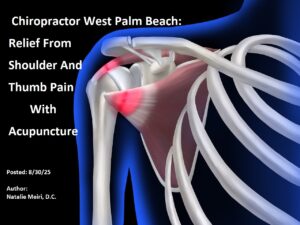
This is my clinical pearl story about Chiropractor West Palm Beach: Relief from Shoulder and Thumb Pain With Acupuncture.  She was a 63 year old female patient.  Her chief complaints were right shoulder and bilateral (right and left) thumb pain.   To be HIPAA compliant, I will call her Elisha instead of her real name.

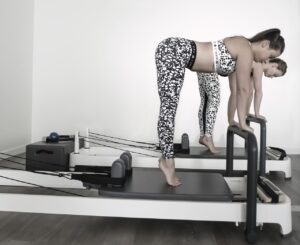
Elisha’s right shoulder pain had come on a year ago.  She had injured her shoulder in Pilates class. However, the right thumb pain was a chronic “10 year old” problem.   After an examination and imaging, her orthopedist had sent her to physical therapy.  Nevertheless, it continued to hurt, so she came to see me.   

Elisha was also an avid gardener.  Additionally, she had a lot of hobbies around the house.  She attributed her thumbs hurting from the repetitive use in her various activities.

 

Elisha’s Examination at Meiri Chiropractic

Upon examination, Elisha tested positive for her right shoulder condition.  Her x-rays taken at the orthopedist showed degenerative arthritis (osteoarthritis) in her right shoulder and both thumbs. Elisha’s diagnosis was right shoulder rotator cuff sprain/strain and osteoarthritis in her thumbs.


What is a rotator cuff sprain and strain?

Firstly, the rotator cuff is a group of muscles (supraspinatus, infraspinatus, teres minor, subscapularis) that hold the shoulder joint in place and allow you to move your shoulder. 

Secondly, a sprain is a sudden or violent twisting injury of a joint with stretching or tearing of ligaments. Symptoms can be joint swelling, bruising, and instability.

Thirdly, a strain occurs when a muscle is overstretched or torn. This usually occurs as a result of fatigue, overuse, or improper use. Furthermore, damage to your attached tendons can also occur with a strain. Symptoms include muscle pain, spasms, weakness, and cramping. 

Fourthly, both a strain and/or sprain can cause pain, tenderness, and limited motion in the affected area.
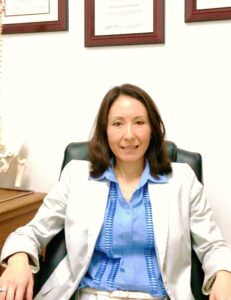


Dr. Natalie Meiri
Dr. Natalie Meiri

Elisha’s Acupuncture Treatments at Meiri Chiropractic

Elisha initially treated with chiropractic care for her right shoulder complaint. Indeed, her right shoulder and thumb pain did decrease with chiropractic care. Moreover, the function in both her shoulder and thumbs did improve.  Next, she did a course of acupuncture to complete her healing.  

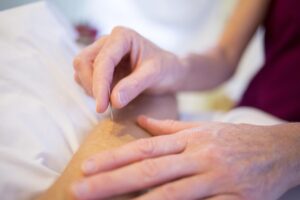
Her acupuncture treatments consisted of the insertion of very thin metal needles.  These were inserted into the skin and underlying tissues.  Finally, Elisha reported that she was pain free!  And she was back at Pilates and returned to her favorite hobbies again.


How Does Acupuncture Help Rotator Cuff Injury and Thumb Pain?

Neuroscientists at Harvard Medical School looked at the underlying neuroanatomy of acupuncture.  Specifically, that acupuncture activates a nerve signaling pathway. The signaling affects the function of other parts of the body, including organs (and neuromusculoskeletal body parts).

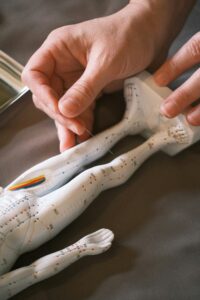
Acupuncture has been used for over 4000 years to treat pain and other health problems safely and effectively. The acupuncture treatment stimulates the imbalanced pathways called meridians. This activates the body’s natural healing abilities.  Ultimately, this brings balance back to your body. Indeed, Acupuncture has a beneficial effect when treating many diseases and painful conditions.

Meiri Chiropractic offers acupuncture for shoulder, thumb pain and many other ailments. Dr. Natalie Meiri is a chiropractic physician, board certified in acupuncture with over 20 years of experience.  Call today for your acupuncture treatment for shoulder pain and thumb pain at 561-253-8984.
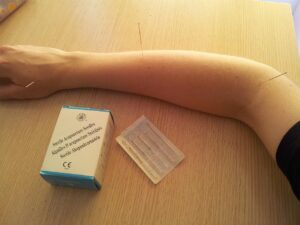
 

Chiropractor West Palm Beach: Relief From Shoulder And Thumb Pain With Acupuncture


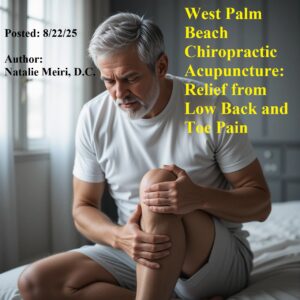
West Palm Beach Chiropractic Acupuncture: Relief from Low Back and Toe Pain

From Dr. Natalie Meiri’s clinical pearl story about West Palm Beach Chiropractic Acupuncture:  Relief from Low Back and Toe Pain


This is my clinical pearl story about West Palm Beach Chiropractic Acupuncture:  Relief from Low Back and Toe Pain.  He was a 65 year old male patient.  His chief complaints were low back and toe pain.   To be HIPAA compliant, I will call him Frankie instead of his real name.

Frankie’s low back pain had come on 20 years ago.  He didn’t know how it started because there was no trauma. It came on insidiously. He was a technician servicing various machinery.  Therefore, his job entailed a lot of driving and lifting heavy equipment.  Frankie definitely thought a lot of his back problems were job related.

When Frankie first came to see me, he stated the “back problem had become a numbness” in his gluteal (buttock) area. The numbness was new and alarming to him.  Moreover, he had “pain in both big toes”. So he had gone to an orthopedist initially.  He was diagnosed with Osteoarthritis of his low back and toes.  Next, he was prescribed drugs. Finally, he was sent to physical therapy.  After some sessions, Frankie’s condition wasn’t improving.  And when the orthopedist suggested injections, he decided to turn to another alternative. Frankie had always had success with natural and holistic healing. So that’s when he came to see me.


Frankie’s Examination and Imaging

Upon examination, Frankie tested positive for his back pain condition.  His x-rays taken at the orthopedist showed degenerative arthritis (osteoarthritis) in his lumbar spine and both halluces (big toes). Additionally, Frankie’s diagnosis was sciatica which was the cause of the numbness in the gluteal area. And Frankie’s toes (in extension) were due to a Sand Toe injury.   

What is Sciatica?

Firstly, the sciatic nerve is the largest nerve in the human body. Sciatic nerves originate from several nerves in your lower back. These nerves branch outward from the spine. And then it comes together at each buttock to form the sciatic nerve, which then radiates down each leg.


Secondly, the word “sciatic” is defined as relating to the hip or ischium or to any structure in its vicinity, as the sciatic nerve. The ischium is a paired bone (one on each side) of the pelvis.  This forms the lower and back part of the hip bone(s).


Thirdly, sciatica is defined as irritation or compression of the sciatic nerve.  This causes pain in the buttock area with radiation to the lower leg. It is a condition characterized by pain along the course of the sciatic nerve.  Furthermore, it is usually a neuritis (inflammation of a nerve).  And it generally involves the lumbosacral spinal nerve roots.


Fourthly, many cases have a spinal cause, such as disc herniation/bulge causing impingement of L5 or S1 nerve roots. Other common causes include spinal stenosis, degenerative disc disease (wear and tear arthritis/osteoarthritis), and spondylolisthesis. There are also other causes of sciatica, which are less common. These include piriformis, trauma, post-operative complications, gynecologic conditions, and herpes zoster (shingles).


Fifthly, in Frankie’s case, his sciatica was due to osteoarthritis.


What is Sand Toe?

“Sand toe”, is an injury to the big toe joint, specifically the metatarsophalangeal joint (MTPJ). It can be caused by repetitive hyperextension of the big toe.  For instance, like running and jumping. Symptoms include throbbing pain, swelling, and bruising.  In Frankie’s case, it may have also been work related.


Frankie’s Acupuncture Treatments at Meiri Chiropractic

Frankie initially treated with chiropractic care for his low back complaint. Indeed, his low back pain did decrease. However, the numbness wasn’t completely gone.  Of course, there was the halluce (big toe) problem.  Therefore, I started him on acupuncture treatments.

His Acupuncture treatments consisted of the insertion of very thin metal needles.  These were inserted into the skin and underlying tissues.  Finally, Frankie’s outcome from the acupuncture was a complete resolution.


Dr. Natalie Meiri
Dr. Natalie Meiri
How Does Acupuncture Help Sciatica, arthritis and “sand toe”?

Neuroscientists at Harvard Medical School looked at the underlying neuroanatomy of acupuncture.  Specifically, that acupuncture activates a nerve signaling pathway. The signaling affects the function of other parts of the body, including organs (and neuromusculoskeletal body parts).

Acupuncture has been used for over 4000 years to treat pain and other health problems safely and effectively. The acupuncture treatment stimulates the imbalanced pathways called meridians. This activates the body’s natural healing abilities.  Ultimately, this brings balance back to your body. Indeed, Acupuncture has a beneficial effect when treating many diseases and painful conditions.

Meiri Chiropractic offers acupuncture for low back pain, osteoarthritis, sciatica, sand toe and many other ailments. Dr. Natalie Meiri is a chiropractic physician, board certified in acupuncture with over 20 years of experience.  Call today for your acupuncture treatment for sciatica at 561-253-8984.


Chiropractor West Palm Beach: Acupuncture for Sciatica Relief


This post is about Chiropractor West Palm Beach: Acupuncture for Sciatica Relief.  Symptoms include mid-buttock pain that radiates down the leg, most often unilaterally (one side). You will often experience an abnormal sensation such as numbness or parethesia (pins and needles). You may also have weakness in the leg effected.

If you have Sciatica, acupuncture can provide relief!  We’ve got some great information to share below.


What is Sciatica?


Firstly, the sciatic nerve is the largest nerve in the human body. Sciatic nerves originate from several nerves in your lower back. These nerves branch outward from the spine. And then it comes together at each buttock to form the sciatic nerve, which then radiates down each leg.


Secondly, the word “sciatic” is defined as relating to the hip or ischium or to any structure in its vicinity, as the sciatic nerve. The ischium is a paired bone (one on each side) of the pelvis that forms the lower and back part of the hip bone(s).


Thirdly, sciatica is defined as irritation or compression of the sciatic nerve that causes pain in the buttock area with radiation to the lower leg. It is a condition characterized by pain along the course of the sciatic nerve.  This is usually a neuritis (inflammation of a nerve).  It is generally caused by mechanical compression or irritation of the lumbar and sacral spinal nerve roots.


Fourthly, many cases have a spinal cause, such as disc herniation/bulge causing impingement of L5 or S1 nerve roots. Other common causes include spinal stenosis, degenerative disc disease (wear and tear arthritis/osteoarthritis), and spondylolisthesis. There are also other causes of sciatica, which are less common. These include piriformis, trauma, post-operative complications, gynecologic conditions, and herpes zoster (shingles).


 Some Causes of  Sciatica


  1. Disc herniation

This occurs usually between the ages of 30 and 50. This age range is due in part to the fact that the disc’s nucleus pulposus (central, softer jelly like inner part of disc) dehydrates with aging, leaving little to herniate.  Low back pain with radiation in the leg(s) which travels below the knee is a symptom. Paresthesia or numbness is more commonly found with disc herniations especially in the foot or ankle area.


You may have had a twisting injury accompanied by immediate leg pain. The leg pain is often more of a concern than the back pain.  Moreover, pain is often worse with sitting (due to increased disc pressure) and less with standing or walking.  In the past, you may have a history of recurrent episodes of back pain without leg pain.


  1. Spinal Stenosis


The 50 year old and above with leg pain is more likely to have sciatica due to stenosis (narrowing of the spinal canal). You may have more difficulty with walking or standing.  This is because of the compressive effect created by the loading of the posterior (back of) spine where most of the stenosis occurs. Leg pain from spinal stenosis is called neurogenic claudication. 


So neurogenic claudication is secondary (due) to spinal stenosis.  In other words, neurogenic claudication is usually caused by spinal stenosis in the lumbar spine (lower back). This narrowing of the spinal canal is generally caused by arthritic changes in the lower spine.


Chiropractor West Palm Beach: Acupuncture for Sciatica Relief

Firstly, in the treatment of sciatica, the first option is a conservative approach using conventional medications (CMs) such as nonsteroidal anti-inflammatory drugs (NSAIDs), muscle relaxants, opioid analgesics, and corticosteroids. However, these have provided limited pain relief.  Furthermore, these have been often accompanied by adverse effects.  These include dizziness, drowsiness, intoxication, allergic reactions, hepatic and gastrointestinal dysfunctions.

Secondly, results of one study showed that acupuncture may be more effective than NSAIDs (e.g. ibuprofen) in decreasing the patient’s pain level for leg pain/lumbago (low back pain). The study also stated, “Moreover, acupuncture may enhance the effect of medications in leg pain/lumbago relief. To patients with sciatica, acupuncture points appear more effective than nonacupoints”. (1)

Thirdly, a small, randomized clinical trial published in the December 2024 issue of JAMA Internal Medicine has found that acupuncture could offer relief for sciatica. Researchers randomly assigned 216 people (average age 51).  All the participants with sciatica caused by a herniated disk got either real acupuncture or a sham procedure.  And this lasted for 10 sessions over four weeks. In conclusion, those who received acupuncture reported having less leg pain and better physical function.  And this lasted up to a year.


Dr. Natalie Meiri
Dr. Natalie Meiri

Chiropractor West Palm Beach: Acupuncture for Sciatica Relief

Acupuncture has been used for over 4000 years to treat pain and other health problems safely and effectively. The acupuncture treatment stimulates the imbalanced pathways called meridians. This activates the body’s natural healing abilities.  Ultimately, this brings balance back to your body. Acupuncture has a beneficial effect when treating many diseases and painful conditions.

Meiri Chiropractic offers acupuncture for sciatica and many other ailments. Dr. Natalie Meiri is a chiropractic physician, board certified in acupuncture with over 20 years of experience.  Call today for your acupuncture treatment for sciatica at 561-253-8984.


References: (1) Effectiveness of Acupuncture for Treating Sciatica: A Systematic Review and Meta-Analysis.

Zongshi Qin, Xiaoxu Liu, Jiani Wu, Yanbing Zhai, Zhishun Liu  PMCID: PMC4631886  PMID: >26576192


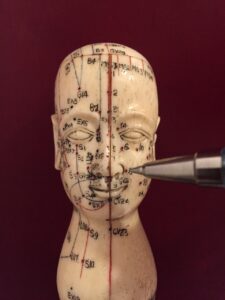
Chiropractor West Palm Beach: Acupuncture for Sinusitis.


Chiropractor West Palm Beach: Acupuncture for Sinusitis is about the natural treatments for sinusitis (sinus infection/inflammation)/sinus problems through acupuncture. Acupuncture has been traditionally used to treat respiratory conditions in China for more than a thousand years.  These include sinusitis/sinus problems, allergic asthma, and chronic bronchitis.

There are higher rates of sinusitis in the South, Midwest, and among women in the U.S.A. Furthermore, kids younger than 15 years of age and adults aged 25 to 64 years are affected most. 

Acupuncture has a beneficial effect when treating many diseases and painful conditions. Therefore, acupuncture is thought to be useful as a complementary, alternative and integrative therapy for Sinusitis.


Symptoms of Sinusitis

Indeed, the symptoms of sinusitis can be very painful and uncomfortable. This includes fever (usually low-grade, but higher in some cases), cough, headache, earache, toothache, facial pain, cranial pressure, difficulty breathing through the nose, loss of the sense of smell, fatigue, malaise, halitosis (persistent bad breath) and facial pain. Furthermore, it can even cause facial swelling along with a stuffy nose and thick discharge of mucus.  Next, the postnasal drip may cause a sore throat, nausea and difficulty sleeping.  

Anatomy of Paranasal Sinuses

The paranasal sinuses are located near the nose and connect to your nasal cavity. There are four paranasal sinuses: maxillary, ethmoid, sphenoid, and frontal. They are named corresponding to the respective bone from which it takes its name. The sinuses are hollow spaces in the skull and facial bones around the nose.  These are air-filled cavities within the frontal, ethmoidal, sphenoidal, and maxillary bones. All drain into the superior (upper) or lateral (side) aspect of the nose. The sinuses’ lining the mucosa (mucus membrane) is continuous with the nasal cavity.  Therefore, any infections from the nasal mucosa can easily spread to the sinuses.


Cause of Sinusitis

The cause of Sinusitis is multifactorial.  Most people with colds have an element of viral sinusitis. If you have atopy, a genetic immune system problem, it may make you more likely to develop allergic diseases (e.g. seasonal allergies).  So you are more susceptible to sinusitis. Similarly, sinusitis can be caused by allergens, environmental irritants, viruses, fungi, and bacteria. For example, irritants are animal dander, polluted air, smoke, and dust.

First, a viral upper respiratory infection may cause sinusitis secondary to edema. Second, inflammation of the nasal lining and the production of thick mucus that obstructs the paranasal (near to nose) sinuses allows a secondary bacterial overgrowth. Third, allergic rhinitis (hayfever) can lead to sinusitis.

Other risk factors of sinusitis include:

  • Air travel can lead to inflammation of the sinuses, because of changes in air pressure.
  • Chronic sinusitis may be caused by small growths in the nose, injury of the nasal bones, air pollution, dental complications, emotional stress, smoking, and exposure to irritant fumes and smells.
  • Allergic sinusitis may be caused by hay fever or food allergies, especially allergies to milk/ dairy products.
  • People with compromised immune systems (e.g. HIV) are more susceptible to sinusitis.


Acupuncture Treatment and Sinusitis

Conventional medical treatment for sinusitis is usually satisfactory, but often for a short time.  However, many patients have limited or no effect from conventional treatment. Therefore, the condition progresses to a chronic sinusitis which can last for many years. Treatment of chronic sinusitis is a well-established procedure in traditional Chinese acupuncture. Accordingly, acupuncture can be utilized to relieve symptoms of chronic sinusitis.


Research on Acupuncture and Sinus Problems

In one study the favorable effects of acupuncture in the treatment of children and young adults with chronic maxillary sinusitis, compared with antibiotics was reported. Numerous observational studies have suggested that acupuncture can be effective in sinusitis or sinus pain.

In another study, Nasal congestion was explored in regards to acupuncture.  It was found those receiving acupuncture had a more positive outcome with nasal problems.  Nasal congestion is one of the most common complaints seen in primary care settings. Additionally, the side effects of decongestants are frequently seen in patients with chronic nasal congestion and sinus problems. In conclusion, this leads to an increasing demand of alternative treatments such as acupuncture for nasal congestion and sinus problems. 


Dr. Natalie Meiri
Dr. Natalie Meiri
Chiropractor West Palm Beach: Acupuncture for Sinusitis

Acupuncture has been used for over 4000 years to treat pain and other health problems. The acupuncture treatment stimulates the imbalanced pathways along the meridians to bring balance back.  Mainly, the goal is to activate the body’s natural healing abilities. 

After a thorough exam to rule out any critical problems, a course of acupuncture may definitely help. Meiri Chiropractic offers acupuncture for sinus problems and many other ailments. Dr. Natalie Meiri is a chiropractic physician, board certified in acupuncture with over 20 years of experience.  Call today for your acupuncture treatment for sinusitis at 561-253-8984.


References: Acupuncture for nasal congestion: a prospective, randomized, double-blind, placebo-controlled clinical pilot study

Am J Rhinol Allergy . 2009 Nov-Dec;23(6):e23-8.  doi: 10.2500/ajra.2009.23.3380. Epub 2009 Sep 18.

Serkan Sertel  1 Zazie BergmannKerstin RatzlaffIngo BaumannHenry Johannes GretenPeter Karl Plinkert


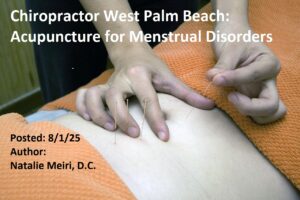
Chiropractor West Palm Beach: Acupuncture for Menstrual Disorders is about how to minimize or eliminate the bad symptoms of menstrual disorders.

More than half of women who menstruate have some pain for 1 to 2 days each month. Usually, the pain is mild. Others have severe pain with other symptoms, including diarrhea, nausea, vomiting, headache, and dizziness. Above all, it keeps them from doing normal activities for several days a month. 

Acupuncture  has been used for over 4000 years to treat pain and other health problems. The acupuncture treatment stimulates the imbalanced pathways along the meridians to bring balance back.  Mainly, the  goal is to activate the body’s natural healing abilities. It’s often used as part of a broader approach to healthcare.

Acupuncture has a beneficial effect when treating many diseases and painful conditions. Therefore, acupuncture is thought to be useful as a complementary, alternative and integrative therapy for Menstrual Disorders.


What is Premenstrual Syndrome?

Premenstrual syndrome (P.M.S.) is a hormone mediated response to fluctuating levels of progesterone and estrogen (sex and reproductive hormones).  Symptoms generally represent the consequences of emotionaI lability (rapid, often exaggerated changes in mood, where strong emotions or feelings occur). For instance, mood swings, anxiety, and depression occur. Furthermore, hormonal effects on neuroendocrine (cells that release hormones into the blood in response to stimulation of the nervous system) function cause headaches, food cravings, fluid retention, breast tenderness or fullness, and back pain.  P.M.S. appears 7 to 10 days prior to menses and improves within hours to days following the onset of menses. After that, dysmenorrhea (menstrual symptoms) may appear.

What is Dysmenorrhea?

Dysmenorrhea is the medical term for pain with your period (menstruation) or menstrual cramps. There are two types of dysmenorrhea: primary and secondary. Primary dysmenorrhea is the name for common menstrual cramps that come back over and over again (recurrent). Secondary dysmenorrhea can be due to other diseases.  With secondary dysmenorrhea (due to endometriosis or fibroids), you may want to talk to your doctor (OB/GYN) about a diagnosis and treatment options.


Why Do P.M.S. (Premenstrual Symptoms) and Dysmenorrhea occur?

The pituitary gland, a pea-sized gland at the base of the brain, produces a number of hormones. Each of these hormones affects a specific part of the body.  Luteinizing hormone and follicle-stimulating hormone produced by the pituitary, promote ovulation and stimulate the ovaries to produce estrogen and progesterone.

Estrogen and progesterone stimulate the uterus and breasts to prepare for possible fertilization. Estrogen causes the breast ducts to enlarge. Progesterone production causes the milk glands to swell. Both of these events can cause your breasts to feel sore.

Before a period begins, the cells that form the lining of the uterus begin to break down.   As a result, large amounts of inflammatory prostaglandins are released. During menstruation these chemicals constrict the blood vessels in the uterus and make the muscle layer contract, causing painful cramps.  Additionally, prostaglandins can cause symptoms of headache, nausea, vomiting, diarrhea, and urinary frequency.  Heavy contractions can lead to low back pain.  Similarly, lower abdominal pain can radiate into the low back.


Theories to explain why symptoms vary from woman to woman:

 -Some women may metabolize progesterone differently with the result of less allopregnenolone. (Allopregnanolone is a neuroactive steroid involved in modulating behavioral functions, stress). 

-Serotonin levels decreasing. Serotonin is a key hormone that stabilizes our mood, feelings of well-being, and happiness. 

-There is estrogen excess or progesterone deficiency (through stimulation of the renin-angiotensin system and increased levels of aldosterone) leads to fluid retention. The Renin-Angiotensin-Aldosterone System (RAAS) is a hormone system within the body that is essential for the regulation of blood pressure and fluid balance. 

-There are nutritional imbalances in B6 and magnesium, altered blood sugar levels, and prostaglandin imbalance. 


Dr. Natalie Meiri
Dr. Natalie Meiri
Research on Acupuncture and How It May Alleviate Your Symptoms

Results of one study suggest that acupuncture might reduce menstrual pain and associated symptoms more effectively compared to no treatment or NSAIDs (nonsteroidal anti-inflammatory drugs). And the efficacy could be maintained during a short-term follow-up period (1).

How acupuncture can alleviate your symptoms is not completely known.  There are studies on acupuncture treatments and the following:  

Firstly, Endorphins are released during acupuncture.  This acts as the body’s natural pain-relieving mechanism.  Additionally, this may reduce period pain intensity, duration, and symptoms.  This includes headaches, breast tenderness, and bloating.

Secondly, acupuncture improves blood flow to the abdomen and pelvic area.  This may help reduce pain/ menstrual cramping.

Thirdly, acupuncture may help with balancing hormones.  Indeed, hormonal imbalance may be a cause of your menstrual pain and stress levels.

Fourthly, by reducing inflammation Acupuncture provides pain relief.

Fifthly, acupuncture helps relax muscles.  So your uterine muscles will be cramping less.


Chiropractor West Palm Beach: Acupuncture for Menstrual Disorders

If you are suffering from menstrual disorders contact Meiri Chiropractic.  Your chiropractic physician certified in acupuncture in West Palm Beach will get you better.  Call 561-253-8984 to make an appointment or to learn more about Chiropractor West Palm Beach: Acupuncture for Menstrual Disorders.


References:  (1)The efficacy and safety of acupuncture in women with primary dysmenorrhea, A systematic review and meta-analysis, Hye Lin Woo Hae Ri Ji, Yeon Kyoung Pak, Hojung Lee, Su Jeong Heo, Jin Moo Lee, Kyoung Sun Park