A Chiropractor Can Provide Care for Fibromyalgia Naturally 
Author: Natalie Meiri, D.C.     Posted: 10/11/20


If you have fibromyalgia you feel achy, fatigued, and stiff in multiple muscle groups. You may have other associated symptoms as well.  Read below to learn about this systemic disorder and how a chiropractor can provide care for fibromyalgia naturally.


Fibromyalgia affects two – four percent of people, women more often than men. It is a type of rheumatism (condition with pain in muscles, joints, or fibrous tissue). Although it most often starts in middle adulthood, it can occur in the teen years and in older ages. You are at higher risk for fibromyalgia if you have a rheumatic disease (health problem that affects the joints, muscles and bones). These include systemic lupus erythematosus, rheumatoid arthritis, or ankylosing spondylitis.


The American College of Rheumatology has set criteria for the diagnosis of fibromyalgia.  You must have pain in 11 of 18 tender sites, with 9 being on both sides of the body, and with pain for at least 3 months. These tender sites include: suboccipital (below lower back of skull) muscles, lower cervical spine (neck), trapezius (pair of triangular muscles extending over back and neck), supraspinatus (smallest of rotator cuff muscles runs from shoulder blade to upper arm), second rib, lateral epicondyle (bony bump on the outside of the elbow), gluteals (muscles in buttocks), greater trochanter of femur (bony projection at top of the thigh bone), and medial (inside) fat pad (mass of fatty tissue that lies below the kneecap) of the knee.

 

Patient in pain from fibromyalgia

Fibromyalgia is a Syndrome

Fibromyalgia is a syndrome (condition characterized by a set of associated symptoms) of chronic pain of musculoskeletal origin, but uncertain cause. Recent research says it is a neurologic health problem that causes widespread pain and tenderness (sensitivity to touch). Many fibromyalgia patients report that certain weather conditions seem to aggravate their symptoms, but scientists have not found out why. 


Several theories have been proposed focusing on lowered pain-threshold levels and decreased serotonin levels. Serotonin is a neurotransmitter. It acts as one of the body’s chemical messengers used by the nervous system to transmit messages from one area of the brain to another. So brain cells related to mood, sleep, memory and some social behavior could be affected by this. Additionally, it is believed that stage 4 sleep (deep sleep that lasts for about 30 minutes) is interrupted in fibromyalgia patients.  This could be due to intrusions of alpha rhythms (pattern of slow brain waves in normal awake persons at rest with closed eyes) during stage 4 sleep. Consequently, fibromyalgia is accompanied by severe fatigue, sleep (waking up unrefreshed), memory/thinking clearly and mood issues.


Moreover, some patients also may have:

  • Depression and anxiety
  • Persistent early morning stiffness
  • Paresthesia (pins and needles feeling)
  • Digestive problems: irritable bowel syndrome (commonly called IBS) or gastroesophageal reflux disease (often referred to as GERD)
  • Irritable or overactive bladder
  • Pelvic pain
  • Temporomandibular disorder – often called TMJ (a set of symptoms including face/jaw pain, jaw clicking, and ringing in the ears)

Diagnosis and causes

There are no lab or imaging (i.e.,x-rays, MRI) tests for diagnosis of fibromyalgia.  It is diagnosed by the tender sites and the associated symptoms experienced by the patient.  Also, there should be no other health problems that would explain the pain and other symptoms. Therefore, lab tests or x-rays may be done to rule out any other cause for your symptoms.

There is most often some triggering factor that sets off fibromyalgia. It may be spine problems, arthritis, injury, or other type of physical stress. Emotional stress also may trigger this illness. The cause may be different in different people. Nevertheless, the result is a change in the way the body communicates with the spinal cord and brain.  Fibromyalgia is not an autoimmune or inflammation based illness, but current research suggests the central nervous system is involved (brain and spinal cord). Seeing a chiropractor can provide care for fibromyalgia naturally by getting your nervous system working at its best through adjustments.

patient utilizing chiropractic along with exercise for fibromyalgia

Where can I find a good chiropractor for fibromyalgia in West Palm Beach?


While there is no cure, there are treatments for management of symptoms.  A chiropractor can provide care for fibromyalgia naturally at Meiri Chiropractic.  Firstly, this involves spinal adjustments or extremity manipulation and may include mobilization.  Secondly, muscle stretching and soft tissue therapy, along with exercise, the use of modalities (i.e. heat therapy, electric muscle stimulation) and rehabilitation/home exercises. Finally, homeopathic consultations/ prescriptions along with recommendations on vitamin/herbal supplementation will be provided as necessary.  These treatments along with regular mild to moderate exercise, stress reduction/ relaxation techniques and enough sleep can give you relief.


Jan Chambers, President of the National Fibromyalgia & Chronic Pain Association (2015), states, “…I started seeing a chiropractor who provided a thorough examination, ordered x-rays and then …created a very rigorous program to address the problems in my neck and lower back. Years later, I still do therapy at home, but it is the chiropractic care that was my lifesaver. I feel like chiropractic care literally saved my life.” (1)


A chiropractor can provide care for fibromyalgia naturally!  Contact Dr Natalie Meiri, a chiropractor serving West Palm Beach, Jupiter, Palm Beach Gardens, and North Palm Beach today at 561-253-8984.


1.) https://www.fmcpaware.org/fibromyalgia/about-fm.html


Meiri Chiropractic

5601 Corporate Way, Ste 102

West Palm Beach, FL 33407

561-253-8984
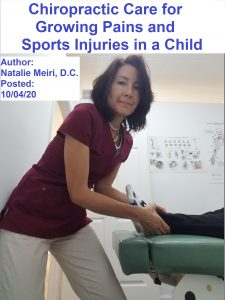


From Dr. Natalie Meiri’s Clinical Pearl Stories: Chiropractic Care for Growing Pains and Sports Injuries in a Child :

This was a 12 year old patient with sports related injuries and “growing pains”.  To be HIPAA compliant, I will call her Jill instead of her real name.  Jill was very happy, outgoing, and enjoyed sports. She had joined a volleyball team at school a year ago and played almost everyday.  Her chief complaints were headaches, stomachaches, and leg pains.  She often missed school or left classes early because of the headaches and stomachaches.  Also, Jill and her mother were exhausted from Jill crying and waking up at night with leg pains.  Her mother finally brought her to see me Chiropractic Care for Growing Pains and Sports Injuries in a Child .


Jill’s Acute Sports Injury


Jill presented to my office in an arm sling.  She had hurt her arm playing volleyball the day before.  Her mom had taken her to an urgent care clinic where the sling was put on her arm.  Jill was perspiring from the pain. There was a lot of spasm in her shoulder and arm, but it wasn’t fractured.  Since it was too spasmed to adjust, I did  soft tissue manipulation on her shoulder/arm muscles, mild mobilization (nonthrust manipulation) at the joints and gave her some homeopathic medicines. Her mother told me “she played volleyball the very next day, the next day and the next day!”  When Jill returned for her visit to treat her chronic pains, her arm was pain free.

Jill’s Chronic Pains


Jill described her headaches as “in the middle of her forehead, above her eyes”.  Her stomachaches were nearly everyday in the late afternoon. Her leg pains started in the late afternoon and at night were severe enough to awaken her.  Jill had been to her pediatrician and her blood tests were normal.  The pediatrician had told her mother, Jill’s “growing pains would just go away eventually”.


Upon examination, there were positive tests for her cervical (neck) spine and ankle joints. She also had some tenderness and palpatory findings (examine by touching) in the muscles around the neck and back portion of both lower legs.  The x-ray of  her cervical (neck) spine taken in my office, showed a loss of her normal cervical lordosis (neck curve). This x-ray finding was consistent with cervical myospasm (muscle spasm). Jill couldn’t remember how she hurt her neck, but her mother attributed it to her many sports activities.  So Jill had a sports injury related problem also in her neck along with “growing pains”.


Although the exact cause of growing pains is unknown, it is an actual diagnosis.  Growing pains are characterized by bilateral pain (pain on both sides) usually in the lower legs occurring severely enough at night to awaken the child, with associated headaches and stomachaches.


Growing pains usually occur between the ages of 6 and 19 years.  Moreover, the pains are more pronounced during the ages of 3 – 9 and then again at adolescence (process of developing from child to an adult) as in Jill’s case. 


 sports injuries and growing pains in a child needing chiropractic


Jill’s Treatments

Firstly, Jill’s treatments consisted of chiropractic manipulation/ adjustments of the cervical (neck) spine, both ankles, and associated regions. Associated regions that were adjusted were her thoracic (mid back) and lumbar (low back) spine, which were misaligned (chiropractic subluxations or intersegmental dysfunctions) due to the conditions she had. Secondly, soft tissue therapy (myofascial release, pressure point and various therapeutic muscle stretching) was performed on all her tender and spasmed muscles. Thirdly, ice/heat therapy recommendations and exercises to continue her treatment at home were given. Finally, homeopathic medicines were prescribed to help reduce her healing time, especially for her headaches and stomachaches.


Jill continued the chiropractic care for growing pains and sports injuries for one and a half years.  She felt better with the treatments. Jill no longer awoke during the night due to leg pains.   She didn’t miss school due to stomachaches or headaches and continued to play volleyball. During this time, she also had a “growth spurt” and started her menstruation (period).  It may appear like growing pains are due to a child’s growth spurts. However, there are no direct indicators relating growing pains in children with their height, weight or rate of growth.


If your child is suffering from growing pains, sports injuries or just needs more wellness, contact Meiri Chiropractic. Dr. Natalie Meiri would be happy to explain the methods of chiropractic care for sports injuries and growing pains in a child.


Meiri Chiropractic

5601 Corporate Way, Ste. 102

West Palm Beach, FL 33407

561-253-8984

 

Are you experiencing pain due to poor posture or repetitive motion injury?  Chiropractors can help posture problems and repetitive motion injuries for you and your family.  The position in which we hold our bodies is our posture. If we don’t have good posture while standing, sitting, or lying down, it will eventually lead to pain and dysfunction. A repetitive motion injury is a term used to describe damage and pain caused by repetitive movement and overuse. The following are 2 conditions due to incorrect posture and/or repetitive motion injury.


1.) Postural Syndrome


Postural syndrome causes constant aching pain in the cervical (neck) and thoracic (mid back) regions. Often, the pain is relieved by activity and made worse by working at a desk.  Because of working at a desk with a hunched forward head posture, an imbalance between the anterior (front) and posterior (back) muscles of the neck and upper mid back occurs.


The muscles such as the pectoralis (chest/ breast muscle) and upper trapezius (pair of triangular muscles extending over back and neck) become chronically shortened and tight in adapting to the position. As a consequence, your midscapular (between shoulder blades) muscles weaken due to the constant strain of holding this position. This includes your middle and lower trapezius and rhomboids (upper back muscles connecting between your spine and two shoulder blades). Your deep neck flexors (front neck muscles close to the spine that bend neck forward) also weaken due to this constant strain.  If left uncorrected, this causes an imbalance in your normal neck curve causing an abnormal lordosis (abnormal curve inward) in the upper neck and/or a kyphosis (roundneck) in the lower neck.


Furthermore, incorrect neck posture causes elevated, rounded shoulders.  And not being able to move your shoulders smoothly will eventually cause pain and dysfunction in your shoulders as well. All of this leads to the posture in your thoracic spine (mid back) becoming a hyperkyphosis (hunchback). So the combination of tight and weak muscles create changes in biomechanics (movements) in your joints leading to further osteoarthritis (wear and tear arthritis).


repetitive and bad posture activity needing chiropractic care


2.) T-4 Syndrome

With T-4 Syndrome you may have upper back stiffness and achiness with associated signs of extremity (upper arm) numbness and/or paresthesia (abnormal sensation such as tingling, burning) in a “stocking and glove” distribution. There may also be associated headaches with T-4 Syndrome.


The exact cause of T-4 Syndrome is unknown. You may have an occurrence during the night or upon rising and prolonged sitting. Repetitive motions such as sustained reaching and pulling activities, shoveling, and overhead cleaning have all been reported as a cause. However, there is a theory relating the sympathetic nervous system and the T2 – T7 nerves in the thoracic (mid back) spine. The sympathetic nervous system regulates the body’s involuntary processes related to the flight-or-fight response, such as increasing the heart rate, and releasing adrenaline.  The sympathetic nervous system may provide a pathway for referral from the thoracic spine (mid back) to the head and arms in T-4 Syndrome.


Meiri Chiropractic’s treatments:


Read below the treatments available for both conditions provided by the chiropractor at Meiri Chiropractic serving West Palm Beach, Jupiter, Palm Beach Gardens and North Palm Beach :


                    -Chiropractic manipulation or mobilization of the cervical                              

                     (neck) and thoracic (mid back) spinal joints

                    -Soft tissue manipulation to the muscles involved

                    -Exercises focusing on stretching tight muscles and strengthening weak muscles

                    -Recommendation on redesign of work environment and ergonomics 

                    -Postural advice/ recommendation of frequent breaks with stretching


It is common to have a postural problem for individuals who work at desks. Prolonged sitting at a desk combined with the repetitive activity of typing or using the mouse for your computer causes postural problems and/or repetitive motion injuries. This sedentary lifestyle which eliminates a variety of movements cause pain and dysfunction. Kids and teenagers can also develop a slumped posture due to heavy back packs, hunching over homework or smart phones.   


Chiropractors can help posture problems and repetitive motion injuries for you and your family. Contact Meiri Chiropractic at 561-253-8984 for the best care in West Palm Beach, Jupiter, Palm Beach Gardens, and North Palm Beach today.


Meiri Chiropractic

5601 Corporate way, Ste. 102

West Palm Beach, FL 33407

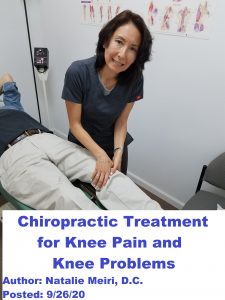
                                       From Dr. Natalie Meiri’s Clinical Pearl Stories:                                 Chiropractic Treatment for Knee Pain and Knee Problems

This was a 53 year old patient who had a chief complaint of right knee pain.  To be HIPAA compliant, I will call him Ted instead of his real name.  Ted was an avid runner for over 10 years and liked running races.  He also enjoyed bicycling, yoga and spinning class (indoor cycling). Unfortunately, he wasn’t able to do these activities without a lot of pain in his right knee. He wanted to get back to doing his activities without pain.  So I provided him with  Chiropractic Treatment for Knee Pain and Knee Problems.

Ted presented to my office 3 years after arthroscopic partial meniscectomy to his right knee. A meniscectomy is an arthroscopic procedure that removes the meniscus or trims the damaged meniscus tissue (also called a debridement).  The knee meniscus is the rubbery knee cartilage that cushions the tibia (shinbone) from the femur (thighbone).

Ted didn’t know exactly how he hurt his knee 3 years ago. It seemed to come on after twisting his knee while lifting a heavy box.  Perhaps it was from repetitive running and “old age”. Furthermore, he stated “it never felt better from the surgery and only has gotten worse”. Since the surgery, he has tried dietary and herbal supplementation, acupuncture, physical therapy and yoga. He came to see me since “everything else he had tried didn’t work”. Chiropractic was his last resort!

Ted’s Knee Pain and Problems

Firstly, Ted had pain, swelling and trouble bending his right knee most of the time. Secondly, he also experienced episodes of knee locking wherein he experienced significant pain and was unable to move the leg for a few seconds until his knee was forcefully extended. Lastly, he described a “burning sensation” at the inside of his knee.

His knee x-ray showed osteoarthritis, a degenerative “wear-and-tear” type of arthritis in his knee.  His original M.R.I. report from 3 years ago noted a partial meniscal tear. I didn’t need any further imaging at this time. I would order another M.R.I. if there was no improvement in 12 visits.

Upon examination, I found Ted had a saphenous nerve entrapment in his right leg besides from the partial meniscal tear and osteoarthritis.  So Ted’s knee pain came from 3 different problems. Nerve entrapment is a medical syndrome that develops when nerves become compressed (or entrapped) and restricted. This occurs due to a variety of causes, from trauma or injury to repeated or overuse activity.  Nerve entrapment to the saphenous nerve can occur at the inside of the knee at the adductor canal.  The adductor canal is a fibromuscular band canal that the saphenous nerve passes above the knee. This was causing Ted’s pain and burning sensation to the inside of his right knee (saphenous nerve distribution). Occasionally, nerve conduction studies are performed to assess the degree of nerve compression and nerve damage. This was not necessary in Ted’s case since he started getting some relief with treatment within 12 visits.

patient with knee injuries needing chiropractic care

Ted’s Chiropractic Treatment for Knee Pain and Knee Problems

Ted’s treatments included chiropractic adjustments/ manipulation to his right knee and any associated foot, ankle, hip, pelvic or lumbar (low back) fixations (chiropractic misalignments).  Additionally, soft tissue therapy (myofascial release, pressure point and various relaxation procedures) and modalities (cold/heat therapy and electric muscle stimulation) were administered. Finally, he was given homeopathic medicines and therapeutic exercises to continue his treatment at home.

Ted gradually got pain relief and improved function in his activities.  It took nearly a year of treatment before Ted was performing his activities pain free. Ted’s knee stopped locking and the burning sensation subsided.  He also was able to perform better in yoga class with improved range of motion. Chiropractic proved to be a highly effective last resort!

Meiri Chiropractic serving West Palm Beach, Jupiter, Palm Beach Gardens, and North Palm Beach offers chiropractic treatment for knee pain and knee problems. Dr. Natalie Meiri will examine, diagnose and come up with a treatment plan to get you back to your activities. Call 561-253-8984 today to schedule an appointment.

HOURS AND LOCATION

5601 Corporate Way, Ste. 102

West Palm Beach, FL 33407

Please call 561-253-8984 during regular business hours  to make an appointment or for further information.

Mon – Fri

9:00 – 5:00

Sat

9:00 – 1:00


This post is From Dr. Natalie Meiri’s Clinical Pearl Stories: Chiropractic Treatment for Chronic Headaches. This was a 48 year old female patient with a chief complaint of chronic headaches. To be HIPAA compliant, I will call her Kate instead of her real name. Kate had migraine headaches since she was a teenager. She described it as a one sided (unilateral) throbbing headache. She would get sensory disturbances called an aura prior to her headaches which is suggestive of classic migraines.  The auras were usually “blurriness and vision changes” in her eye. She used to only get migraine headaches once or twice a month or less which was manageable. 

However, she had headaches almost everyday in the afternoon now for a year since she experienced stress and grief from a family member’s death. Her headaches lasted for several hours, causing her to seek a dark, quiet environment. These were more of a tension headache since it was (suboccipital/ bilateral) at the back of her head on both sides or around both her eyes (supraorbital/ bilateral). Kate also got the classic migraine type of headache once or twice a month. 

In the past, she was active with chores around the house cleaning and cooking after work.  She also enjoyed gardening, dinner with friends, or church activities during her leisure time after work. Currently, she just went home from work and went to sleep due to her headaches.  Her condition seemed to be getting progressively worse and was disabling. 


Moreover, migraine headaches with aura, ran in her family. Kate had a history of high blood pressure managed by her primary care doctor and several people in her family had died of a brain aneurysm. A brain aneurysm is weakness in a blood vessel in the brain that balloons and fills with blood, and can leak or rupture, causing life-threatening bleeding. Also, a key symptom of a ruptured aneurysm is a sudden, severe headache. 

Upon examination she had tender trigger points and tight muscles in the neck. And her neck x-ray taken in my office showed degenerative arthritis (osteoarthritis).  In addition, I ordered a brain CT scan with contrast (injection of contrast material into a blood vessel for evaluation) to rule out any more serious conditions that could be causing her headaches such as tumors or a TIA (transient ischemic attack or stroke that lasts only a few minutes). After all, the headaches were severe and she had a family history of brain aneurysm.  CT scanning provides more detailed information about brain tissue and brain structures than standard X-rays. Fortunately, her CT scan report came back “normal” or negative.

It was once believed that tension-type headaches were due to muscle tension. It is now recognized that although there are often tender trigger points in the neck and suboccipital area, there is no higher incidence of muscle spasm when compared with other headache types. A growing group of researchers believe that chronic tension-like headaches may represent part of a headache continuum. These patients often begin with migraine attacks that gradually transform into more frequent, less severe, tension-type headaches like Kate’s headaches. Kate however, also had her more severe migraine with aura as well about twice a month.


patient suffering from headache needing chiropractic care

Kate’s treatment for chronic headaches

Once believed to be purely vascular, migraine headaches are believed to be neurogenic (caused by nervous system). Furthermore, in women, there is also a hormonal relationship. So to treat Kate’s headache continuum of tension to classic migraine, I utilized a spectrum of therapies. Firstly, she received chiropractic adjustments/ manipulation to her neck and spine along with soft tissue work (myofascial release, pressure point and various relaxation procedures) and exercises to continue at home.  Secondly, recommendations were made on diet and nutrition that triggered her headaches.  Other possible triggers for her headaches such as sleeping issues and environmental pollutants were also eliminated.  Thirdly, I did several homeopathic consultations with Kate and prescribed a number of homeopathic medicines. Kate was against drugs when possible.  Similarly, Kate knew about the rebound headaches that can occur if you take aspirin for longer than 3 days.

Kate responded well to her chiropractic treatment for chronic headaches plan of 1-2 times a week for 3 months. Kate’s headaches decreased in frequency and intensity gradually.  Finally, she was able to do the necessary chores and social activities again without going home to bed after work.    

Meiri Chiropractic serving West Palm Beach, Jupiter, Palm Beach Gardens and North Palm Beach offers chiropractic treatment for chronic headaches. Your chiropractor will examine, diagnose and determine your best course of chiropractic treatment for chronic headaches . Call us in West Palm Beach at 561-253-8984 to schedule an appointment at our chiropractic clinic and start getting the relief you need.


Meiri Chiropractic

5601 Corporate Way, Ste. 102

West Palm Beach, FL 33407

561-253-8984

Back Pain Due to a Herniated Disc and Chiropractic Care

Author: Natalie Meiri, D.C.  Posted: 9/12/20

If you have back pain due to a herniated disc and chiropractic care is your choice, surgery may be avoided!  We’ve got some great information to share below.

What is a Herniated Disc?

The term ‘disc’ is short for ‘intervertebral disc’. The disc is essentially divided into two parts: (1) a central, softer jelly like inner nucleus pulposus and (2) an outer tougher, dense connective tissue (fibrocartilaginous) annulus fibrosus surrounding it. The discs separate the bones of the spine (vertebrae).

A herniated disc refers to a problem with one of the discs that sit between the individual bones (vertebrae) that stack to make your spine. Sometimes called a slipped disc or a ruptured disc, a herniated disc occurs when some of the nucleus pulposus pushes out through a tear in the annulus fibrosus.  A herniated disc, which can occur in any part of the spine, can irritate a nearby nerve. 

Symptoms of a Herniated Disc

Depending on where the herniated disc is, it can result in pain or weakness in an arm or leg. In the low back, you may have leg pain below the knee.   You often will have a painful restriction in moving often more on one side. 

In the neck, sometimes there is hand weakness and in the low back, leg weakness. In the mid back the pain may start around the level of the herniation and travel around the rib cage from the back to the front of the chest or upper abdomen. 

It can cause a deep ache or sharp, electric shock like pain or numbness.  Some patients report some relief with the hand held behind the head for neck herniations. Movements such as sneezing, laughing, coughing, or any other sudden movement can exacerbate the pain.

You can have a herniated disc without symptoms. You might not know you have it unless it shows up on a spinal image such as a MRI (Magnetic Resonance Imaging) or CT (computerized tomography scan).

Causes of a Herniated Disc

A disc herniation is most often the result of a gradual, aging-related wear and tear called disc degeneration. As you age, your discs become less flexible and more prone to tearing or rupturing. However, a disc herniation can occur from a traumatic injury such as a fall or a car accident. Many people state it happened after a simple sudden twisting or bending movement. Repetitive strain over time with incorrect posture and motions, can eventually herniate a disc also. In the neck, it may cause neck and arm pain that came on after a minor injury or insidiously. There is usually a past history of multiple occurrences of the respective neck or back pain that resolved. 

Nerve root irritation may occur as a result of a disc herniation. In the past it was believed that all referred pain that was radicular (nerve root origin) was due to compression of a nerve root by a herniated nucleus pulposus.  Current thinking is that the nerve root is inflamed, but not always compressed. It is theorized that herniated disc material initiates an autoimmune inflammatory reaction or releases irritating substances. So the disc, the corresponding inflamed nerve root, or compression of the nerve root by the disc may be the source of pain.

hands on chiropractic care for herniated disc

If you have back pain due to a herniated disc and chiropractic care is your choice, surgery may be avoided.

Dr. Natalie Meiri will examine you and come up with a treatment plan to get you better. Through regular visits, you can get pain relief and improve your back health with chiropractic manipulative treatments without surgery.

“Softer” approaches involving “no rotation” chiropractic manipulative treatments such as flexion-distraction, blocking, and prone (patient face down) drop-table adjusting are available.  Meiri Chiropractic’s technique is to manipulate at sites other than the herniation. Our other therapies, such as soft tissue techniques, therapeutic exercise, electric muscle stimulation, ice/ heat therapies and homeopathic consultations, may also provide some relief for your pain. 

Call our office which serves West Palm Beach, Jupiter, Palm Beach Gardens and North Palm Beach.  Ask about your neck or back pain due to a herniated disc and chiropractic care at 561-253-8984.


Meiri Chiropractic

5601 Corporate Way, Ste. 102

West Palm Beach, FL 33407

561-253-8984
How Chiropractic Care Can Help Relieve Your Stress

Author: Natalie Meiri, D.C.                   Posted: 9/10/20

We can’t avoid stress in life, but chiropractic care can help relieve your stress. Stress is defined  as “a physical, chemical, or emotional factor that causes bodily or mental tension and may be a factor in disease causation” (1).

Psychosocial stress pervades modern life and is known to have an impact on health. You can experience stress from your environment, your body, and your thoughts. For instance, negative changes such as an illness, injury, job loss, or a relationship break-up can contribute. Similarly, positive changes such as a promotion, a mortgage, or the birth of a child still produce stress. 

When the stress comes on, we need to keep positive, alert and motivated to adjust to changes. However, we need to avoid facing continuous challenges without relief or relaxation. If a person continues challenging themselves without relief, tension builds.


patient experiencing stress needing chiropractic care

Chronic stress can lead to physical symptoms such as:


  1. headaches
  2. muscle tension in the face, neck, back
  3. shoulder/ chest pain
  4. an upset stomach
  5. elevated blood pressure
  6. exhaustion
  7. sexual dysfunction
  8. increase or loss of appetite
  9. problems sleeping


Emotional problems can also result from stress. These problems include depression, panic attacks, and other forms of anxiety and worry. Research suggests that stress also can bring on or worsen certain diseases.

patient experiencing stress needing chiropractic care


How can Chiropractic care help ?


  1. Reduces muscle tension

Chronic back pain is influenced by stress. Chiropractic care can help relieve your stress and anxiety by relieving tension in the neck, back and other stress-related issues. Stress causes your muscles to tense. This  impedes your posture when walking and sitting. A chiropractor helps you loosen the tension you are feeling and corrects your posture.  Regular adjustments from a West Palm Beach chiropractor can help your body keep things moving freely. Adjustments will help your joints to move freely and will relieve pressure on veins, arteries, muscles, and underlying structures.  The result is improved blood circulation and lymphatic system drainage.


  1. Optimizes nervous system function

Chiropractors utilize adjustments to your spine to help restore your autonomic nervous system and body to a natural balance.  The autonomic nervous system is a control system that acts largely unconsciously and regulates bodily functions, such as the heart rate, digestion, respiratory rate, pupillary response, urination, and sexual arousal. This system has a built-in stress response that causes physiological changes to allow the body to combat stressful situations. This stress response, also known as the “fight or flight response”, is activated in case of an emergency. However, this response can become chronically activated during prolonged periods of stress. Prolonged activation of the stress response causes havoc on the body – both physical and emotional.  Chiropractic adjustments sooth your irritated nerves and thereby help deactivate the “fight or flight” stress response.


  1. Personalized patient care

Chiropractors use natural healing solutions and guide you to develop a program to manage your stress levels unique to your life situation.  These various natural strategies include manipulation/ manual therapy , diet supplementation, and homeopathic remedies. In addition, a chiropractor will give you  exercise recommendations and important pointers on how to relax. 

During stressful times,

chiropractic care can help relieve your stress!

In conclusion, chiropractors focus on the evaluation and treatment of neuromusculoskeletal (NMS)-based disorders.  However, chiropractors also help treat the multiple potential causes of ill health including chronic stress. The chiropractor holistically views the human being as a dynamic, integrated, and complex living being who has an innate capacity for self-healing. Successfully reduce your stress and its consequences with natural chiropractic care!

Call your chiropractor serving West Palm Beach, Jupiter, North Palm Beach, and Palm Beach Gardens at 561-253-8984.


References

  1. “Stress.” Merriam-Webster.com Dictionary, Merriam-Webster, https://www.merriam-webster.com/dictionary/stress. Accessed 10 Sep. 2020.


 From Dr. Natalie Meiri’s Clinical Pearl Stories:

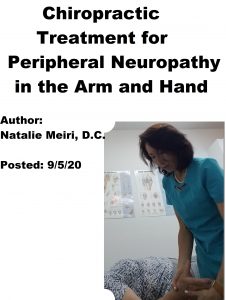
Chiropractic Treatment for Peripheral Neuropathy in the Arm and Hand

Author: Natalie Meiri, D.C.        Posted: 9/5/20

This was a 56 year old female patient with a chief complaint of carpal tunnel syndrome in both hands. To be HIPAA compliant, I will call her Stephanie instead of her real name. Stephanie has been a secretary/ administrative assistant for over 20 years. Her problems came on gradually over the years. Subsequently, while typing at the computer, her arms and hands would go numb and tingle.  Hand weakness at times made it difficult to grasp small objects or perform other manual tasks. She also complained of neck and right shoulder pain from repetitive lifting of the phone to her ear and writing.  Stephanie fixed the incorrect ergonomics in her office, used a night splint, and was taking a B-complex vitamin, but her condition worsened. So she went to a neurologist to get some answers.

Chiropractic Treatment for Peripheral Neuropathy in the Arm and Hand

Stephanie’s neurologist ordered an EMG/NCV (electromyography and nerve conduction velocity tests are electrodiagnostic tests that measure the electrical activity of muscles and nerves). And she tested positive for carpal tunnel syndrome in both wrists.  Afterward, he also gave her a cortisone shot to her wrists which wasn’t successful. She came to see me because she didn’t want surgery if possible.

The x-rays taken in my office showed moderate osteoarthritis in her cervical (neck) and thoracic (mid back) spine. This is the “wear and tear” type of arthritis when the bones rub against one another causing pain, stiffness, inflammation, disc degeneration and bone spurs (also known as osteophytes) which can “pinch” surrounding nerves. Upon examination, I found her arm and hand pain/ numbness was coming from the entrapment (pressed or squeezing) of the median nerve at several levels:  the carpal tunnel (passageway of ligament and bones) at her wrists, pronator teres muscles in her forearms, and her right shoulder at the pectoralis minor muscle and surrounding fascia (thin casing of connective tissue).

repetitive injury

Stephanie’s chiropractic treatment for peripheral neuropathy in the arm and hand started at 3 times a week for 2 weeks and then 1 time a week for 2 months. Firstly, her treatments included chiropractic adjustment/ manipulation to her right shoulder, both wrists, hands, cervical (neck) and thoracic (mid back) spine. Secondly, soft tissue therapy (myofascial release, pressure point and various relaxation procedures) at the entrapment sites of the median nerve in each arm was given.  Thirdly, modalities (cold/heat therapy and electric muscle stimulation) were administered. Finally, exercises for stretching, strenghening, and better posture were recommended.

Stephanie started feeling better gradually in her neck, mid back and right shoulder.  Moreover, Stephanie got relief and function back in her wrists and hands without surgery!

Meiri Chiropractic in West Palm Beach offers chiropractic treatment for peripheral neuropathy in the arm and hand. Dr. Natalie Meiri will examine, diagnose and determine the best course of treatment for you. Call us at 561-253-8984 in West Palm Beach to schedule an appointment at our chiropractic clinic and start getting the relief you need.


Meiri Chiropractic

5601 Corporate Way, Ste. 102

West Palm Beach, FL 33407

561-253-8984

 

Chiropractic Care After a Car Accident

Chiropractic Care After a Car Accident

Author: Natalie Meiri, D.C.   Posted: 8/30/20

It’s easy to forget about what’s most important when you’ve been in a car accident.  Between getting your car fixed, dealing with the insurance claims or possibly hiring an attorney you may be very busy. What’s most important is your health! You may think it’s just a minor “fender bender”, and be popping pain medication.  Even in low collision accidents, with little damage to the vehicle, people are injured. In fact, low-speed rear impact crashes account for most rear-impact collision injuries.  The range of speed in these cases is around 6-12 miles per hour.  A chiropractor can help you identify any injuries not apparent to you.  Furthermore, chiropractic care after a car accident can get you out of pain naturally.  After all, pain medications can be harmful and additive.

neck pain from car accident


Whiplash or acceleration /deceleration injury in particular is hard to identify without professional help.

Whiplash occurs when your head suddenly whips backward and then forward during the collision.   Firstly, whiplash can cause neck pain with or without numbness and tingling in your arms. Secondly, you may also experience headaches, dizziness, nausea, jaw pain, chest pain, and even anxiety.  Thirdly, besides from your neck, you may have injured your mid back, low back or extremities (shoulder, elbow, wrist, hand, hip, knee, ankle, foot) in the accident.

Dr. Natalie Meiri
Dr. Natalie Meiri

Some people aren’t aware of their injuries until months or years later.

By this time, your body has laid scar tissue down as a result of damaged soft tissue, joint capsules and interverte­bral discs.  Unfortunately, chronic painful conditions can develop if injuries aren’t addressed immediately. And chronic conditions can persist for years and be more difficult to treat. Results from one study (Cote P, Cassidy JD, Carroll L (2000) Accident Analysis and Prevention) associated a history of neck injury in an M.V.A. (motor vehicle accident) with headaches, disabling neck pain, and a perception of lower general health.

You may need your accident documented properly for your insurance company or attorney.  A licensed chiropractor can help you provide evidence of injury and the resources you need to submit insurance or legal claims.

Even if it was a minor collision, don’t underestimate the long term effects it can have on your health. Many studies have found delaying treatment lowers the patient’s improvement level.


Dr. Natalie Meiri has treated numerous patients with various injuries for over 20 years.

She will examine, diagnose and come up with a treatment plan to get you out of pain and better. Schedule an appointment by calling 561-253-8984.

references

1.  Cote P, Cassidy JD, Carroll L Is a I lifetime history of neck injury in a traffic collision associated with prevalent neck pain, headache, and depressive symptomatology) Accident Analysis and Prevention 2000; 32: 151-159.


Meiri Chiropractic, 5601 corporate Way, #102, West Palm Beach, FL 33407


From Dr. Natalie Meiri’s Clinical Pearl Stories:

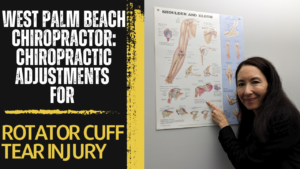
Chiropractic Treatment for Rotator Cuff Injury

Author: Natalie Meiri, D.C.  Posted: 8/29/20

Chiropractic treatment for rotator cuff injury is effective even if you have a rotator cuff tear. This was a 53 year old patient who hurt their left shoulder playing tennis and lifting weights. To be HIPAA compliant, I will call him Peter instead of his real name.  Peter had a M.R.I. (magnetic resonance imaging) finding of a “3 x 3 mm partial thickness tear” of his rotator cuff.  His orthopedic surgeon prescribed P.T. (physical therapy) and suggested surgery (arthroscopy) if  P.T. wasn’t successful. Peter is allergic to N.S.A.I.D.s (nonsteroidal anti-inflammatory drugs like aspirin, ibuprofen) and wanted to avoid drugs and/or surgery. However, the worse was when his orthopedist told him to stop playing tennis!  So Peter never went to P.T. and came to see me instead.

Peter told me he wouldn’t stop playing tennis because he plays tennis almost everyday. Besides, he had a match coming up!  Peter had been extremely active all his life in various sports.  Right now, tennis was his sport.  Actually, I told him I thought he should continue playing tennis.  I gave one restriction: the two handed backhand tennis serve. The 2 handed backhand serve caused extreme pain for Peter’s left shoulder at the time.

tennis can cause rotator cuff injury and Chiropractic Treatment for Rotator Cuff Injury is effective

Dr. Natalie Meiri adjusts the shoulder joint

Starting at 2 times a week and then 1 time a week, his treatments included chiropractic adjustments/manipulation to his left shoulder, neck and thoracic (midback) spine. Additionally, soft tissue therapy (myofascial release, pressure point and various relaxation procedures) and modalities (cold/heat therapy and electric muscle stimulation) were administered. Finally, therapeutic exercises to continue treatment at home were given.

Firstly, the goal was to get him out of pain. Secondly, restore normal range of motion to his shoulder. Thirdly, to strengthen the rotator cuff and scapulothoracic (midback where his left shoulder is attached) musculature.  Advanced strengthening and sport-specific exercises for tennis were introduced as tolerated. As he made progress, I also adjusted his low back to optimize his athletic performance.

Peter experienced pain relief gradually. After 2 months, he had nearly full range of motion without pain. And at 3 months, was able to perform the two handed backhand serve pain-free. Furthermore, Peter went to the gym (with some restrictions from me) and played tennis A LOT while treating with me!  

Chiropractic is for people who want to move and perform better in their sport. Like Peter, chiropractic is for patients who don’t want drugs or surgery. Ultimately, it’s for those who want a better quality of life.

Exercise is health-enhancing and life-extending. When we enjoy it and therefore do it regularly, it gives us an enormous sense of well-being. I rarely tell my patients to stop the exercise that is a source of their joy.  Aristotle, the greek physician of the 4th century said “Life is movement”.

Meiri Chiropractic in West Palm Beach offers chiropractic treatment for rotator cuff injury. Dr. Natalie Meiri will examine, diagnose and come up with a chiropractic treatment plan for rotator cuff injury for optimal relief and function.  And then help you to prevent future injuries. Call 561-253-8984 today to schedule an appointment.   



video on blogwatch video